FYB Online Studio
In Sanskrit, prana means ‘life force’ and ayama means to ‘extend.’ That means that in your pranayama practice, you’re not only breathing but actually extending your life force/vitality! In Patanjali’s Yoga Sutras, he shares how to know when you are in balance vs. out of balance by noticing the quality of your breath. When you’re in balance, the breath is dirgha sukshma (long and smooth). When you’re out of balance, the breath may be svasa prasvasah (disrupted, choppy, etc) — these aren’t hard and fast definitions, but rather a guide for reflection.
As you move through your pranayama practice, focus on developing a long, smooth breath, and how you might need to adjust your practice to allow for the breath to flow freely. You got this!


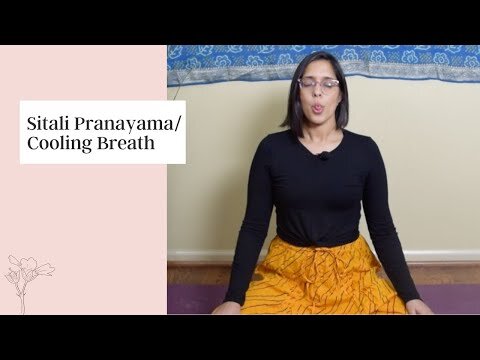
Śītalī Prāṇāyāma, also known as 'cooling breath,' is a soothing breathing technique for reducing excess heat in the body. Examples of how excess heat can show up are migraines, excess sweating, irritability, impatience, etc.
If you are unable to fold the tongue, you can instead press the tongue against the teeth when you inhale through the mouth!
Contraindications:
Actively experiencing a neck injury or severe neck pain

Take 10 minutes before bedtime to slow the breath and the mind. These specific pranayama (breathing practices) helps to lengthen the exhale and relax the abdomen, which has been shown to calm the nervous system.
Accessibility:
This practice can be down seated or lying down.
Contraindications:
Avoid contracting or engaging the abdomen if you are currently pregnant or on your cycle!

This practice supports digestion - both in the physical and emotional sense. Try this breathing practice when you are having difficulty processing things in your life - especially during transitions.
Accessiblity:
This practice can be done seated in a chair, floor, stool, etc.
If you have a shoulder injury or pain, you can skip the arm movements or don’t bring the hand all the way to the opposite shoulder.
Contraindications:
If pregnant, skip the breath retention cues.

If you are new to pranayama/breathing practices, try this practice to learn how to practice ujjayi pranayama, a warming practice that is foundational to yoga practices. Ujjayi in Sanskrit means to ‘move upward toward victory.’
Accessibility:
This practice can be done seated, lying down, or even during yoga asana practice.
Contraindications:
If you are experiencing neck and jaw tension, try the variation where you whisper HAA on the exhale.


Anuloma Viloma, also known as alternate nostril breathing, is an accessible pranayama practice to balance mood, energy levels, and to clear and de-sensitize the nasal passages.
If your sinuses are congested throughout the practice, I recommend stopping to blow your nose and take a few moments before jumping back in - don’t push through!
Accessibility:
This practice is best done seated - on the floor, chair, bed, etc.
Contraindications:
None

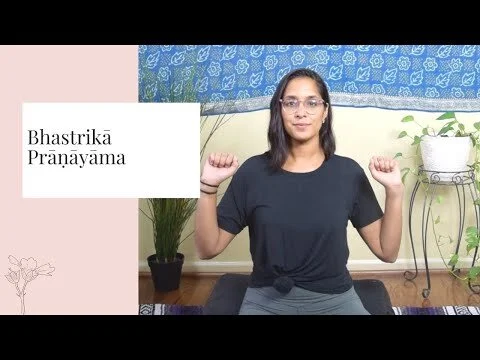
Learn how to practice Bhastrika pranayama (bellow’s breath). This is a supportive practice to release stagnant energy in the lungs, especially after recovering from a cold or sinus issues.

Explore what being nourished looks like and feels like to you through intentional breathing practices and gentle movement.
Practice can be done seated or lying down.


Pranayama can be a powerful practice to support the movement of both individual and collective grief through the body and mind. In this 15 minute practice, you will be guided through breath techniques that help to digest grief on a physical, mental, and emotional level.
This practice can be down seated or lying down.
Get ready to soothe the mind! In this 15 minute guided pranayama practice, practice extending the exhale to calm the nervous system and any anxiety that may be present. You can do this practice seated of lying down.
This practice is also a great fit for back pain, chronic pain, and indigestion.